
How To Barbecue Spare Ribs On Charcoal Grill
Barbecue spare ribs on a charcoal grill require patience, temperature control, and proper airflow management. Compared with direct high-heat cooking, charcoal grilling uses a slower cooking method that allows smoke flavor to develop while gradually breaking down connective tissue.
Before grilling, remove the membrane from the back of the ribs, dry the surface, and apply seasoning evenly. Prepare the charcoal in a two-zone arrangement, placing hot coals on one side and leaving another side for indirect cooking.
Step-by-Step Guide for Charcoal Spare Ribs
Light the charcoal and wait until the coals are covered with gray ash. Maintain a cooking temperature of around 135 to 150°C. Place the spare ribs away from direct charcoal heat, close the lid, and adjust air vents to control airflow.
Most spare ribs require four to six hours depending on thickness and cooking conditions. Add wood chips during the early cooking stage to increase smoky flavor. Apply barbecue sauce near the end of cooking to prevent sugar from burning.
The USDA recommends pork reach a minimum internal temperature of 63°C with a three-minute rest period. A thermometer helps confirm food safety while allowing better control over final texture.
| Cooking Stage | Temperature Range | Purpose |
|---|---|---|
| Charcoal preparation | High heat | Create stable coal temperature |
| Slow smoking | 135 to 150°C | Develop flavor and tenderness |
| Final finishing | 160 to 180°C | Improve surface texture |
Charcoal Grill Structure and Cooking Performance
A well-designed charcoal grill requires stable airflow, durable materials, and effective heat retention. The body structure, ventilation system, cooking grid quality, and surface treatment all influence grilling consistency.
The TOPGRILL Charcoal BBQ Grill is designed for outdoor cooking applications with durable construction and practical grilling functions. Its structure supports traditional charcoal cooking while maintaining reliable operation for different outdoor environments.
Manufacturing Process Behind Reliable BBQ Equipment
Producing a consistent charcoal barbecue grill requires controlled manufacturing. A professional manufacturer manages material preparation, metal cutting, forming, welding, surface treatment, assembly, inspection, and packaging.
Compared with a trader-based supply model, direct manufacturing allows better control over material standards, production efficiency, product adjustments, and repeat-order consistency.
For OEM and ODM projects, the process usually starts with requirement analysis, design confirmation, prototype production, performance testing, packaging approval, and mass manufacturing. Manufacturers can adjust grill dimensions, structure, appearance, and accessories according to project requirements.
Quality Control and Export Supply Checklist
For charcoal barbecue grill sourcing, quality inspection should include:
Material thickness and structural strength checking
Welding quality inspection
Surface coating and corrosion resistance testing
Cooking grid inspection
Assembly accuracy verification
Packaging durability evaluation
For bulk supply projects, review material standards, production capacity, delivery schedule, spare parts support, and export requirements. International markets may require product documentation and compliance with regional safety regulations.
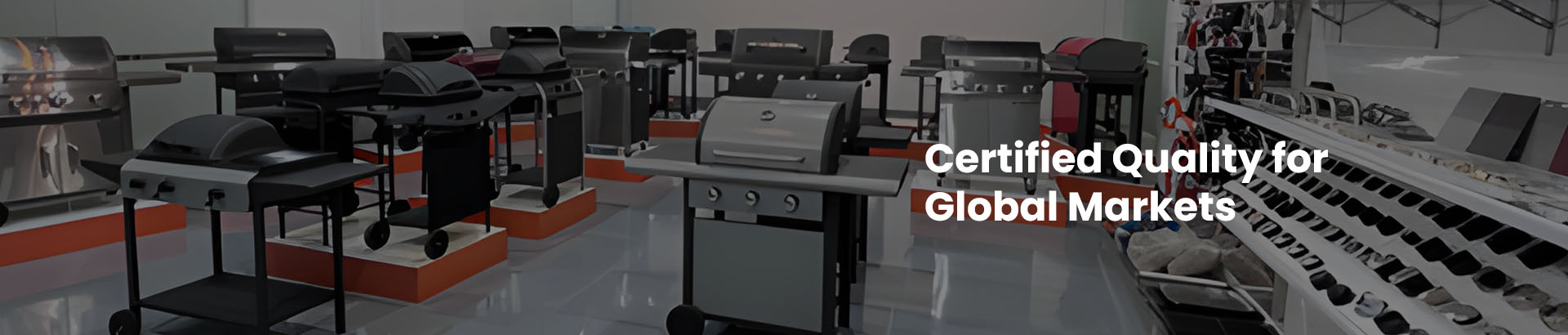
TOPGRILL combines product development, manufacturing management, and quality inspection to support customized outdoor cooking solutions. Through controlled production processes and export experience, the company provides stable charcoal and gas barbecue grill supply for different market needs.