
How To Barbecue Pork Ribs on A Gas Grill
Barbecue pork ribs on a gas grill requires controlled temperature, indirect heat, and enough cooking time to achieve a tender texture. Unlike quick grilling foods, ribs contain connective tissue that needs slow cooking to become soft while keeping the meat flavorful.
Before cooking, remove the membrane from the back of the ribs, dry the surface, and apply seasoning evenly. A properly prepared grill with stable heat control is essential for maintaining consistent cooking results.
Step-by-Step Guide for Gas Grill Pork Ribs
Start by preheating the gas grill to 135 to 150°C. Turn off the burners directly below the ribs and use the remaining burners to create indirect heat. Place the ribs bone-side down, close the lid, and maintain a stable temperature throughout cooking.
Most pork ribs require four to six hours depending on thickness and cooking conditions. Apply barbecue sauce during the final 20 to 30 minutes to improve flavor while preventing the sauce from burning.
According to USDA food safety guidance, pork should reach a minimum internal temperature of 63°C with a three-minute rest period. For ribs, longer cooking times are commonly used to improve tenderness.
| Cooking Stage | Temperature Range | Purpose |
|---|---|---|
| Preheating | 175 to 200°C | Stabilize grill temperature |
| Slow cooking | 135 to 150°C | Break down connective tissue |
| Final glazing | 160 to 180°C | Improve surface flavor |
Gas Grill Design and Heat Distribution
The quality of barbecue ribs depends not only on cooking skills but also on grill structure. Stable burners, even heat distribution, sufficient cooking space, and reliable temperature control help create consistent results.
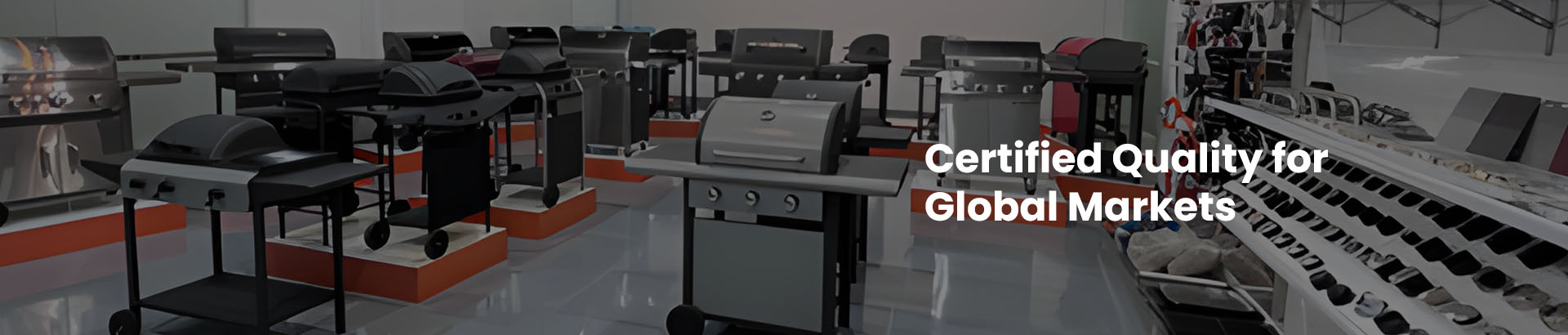
The TOPGRILL Four Burner Gas Grill features a 700 × 400 mm cooking area, four burners, stainless steel 409 burners, heat diffusers, and a double-layer hood. The design supports multiple heat zones, allowing users to slow cook ribs and finish them with higher heat.
Manufacturing Process Behind Reliable BBQ Grills
A professional barbecue grill manufacturer controls the complete production process from raw materials to finished products. The manufacturing process includes sheet metal cutting, forming, welding, surface treatment, burner installation, assembly, performance testing, and packaging.
Compared with a trader-based supply model, direct factory production provides stronger control over materials, engineering adjustments, quality standards, and production schedules.
For OEM and ODM projects, manufacturers should complete requirement analysis, product design confirmation, prototype development, testing, packaging approval, trial production, and mass production. This process allows customized solutions based on market requirements and application needs.
Quality Control and Export Supply Checklist
A reliable gas barbecue grill requires strict quality inspection throughout production. Key checkpoints include:
Material inspection for stainless steel components and cooking grids
Welding strength and surface finish evaluation
Gas leakage testing
Ignition performance verification
Burner flame stability testing
Heat distribution inspection
Final assembly and packaging checks
For bulk supply projects, review material standards, gas compatibility, production capacity, lead time, spare parts availability, and export documentation. Different markets may require compliance with standards such as CE and LFGB.
TOPGRILL integrates product development, manufacturing control, and quality management to provide customized gas barbecue grill solutions. With export experience and structured inspection procedures, the company supports stable quality for repeat orders and long-term supply programs.