
How To Cook Barbecue Ribs on The Grill
Cooking barbecue ribs on the grill starts with steady heat, proper timing, and safe doneness. USDA guidance states that whole cuts of pork should reach 145°F and rest for at least 3 minutes. In real grilling, ribs are usually cooked beyond that safety point so connective tissue softens and the texture becomes more tender. This is why a reliable gas grill needs more than strong fire. It needs stable burners, even heat flow, and a structure that supports controlled cooking over time.
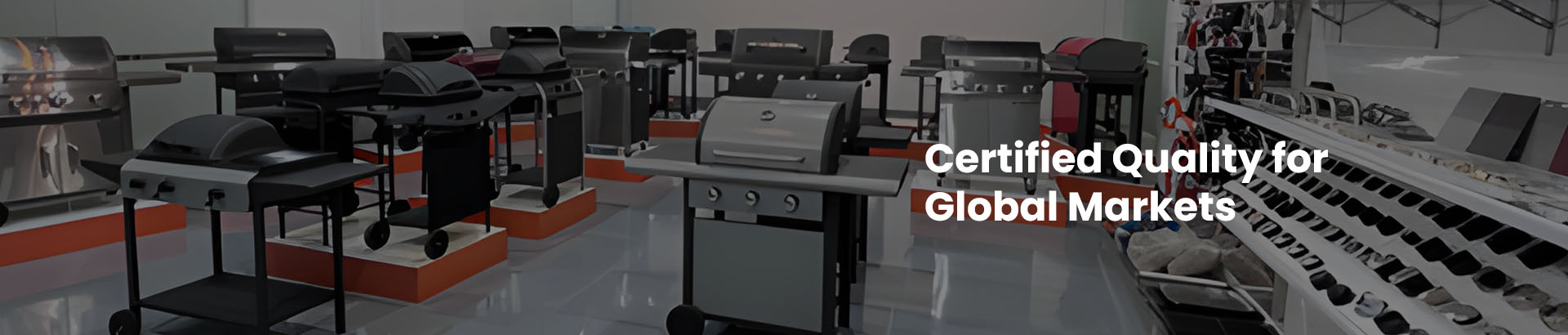
From a sourcing angle, ribs are a practical way to judge grill quality. They cook longer than burgers and contain more fat, so they quickly reveal hot spots, flare up problems, and weak lid heat retention. TOPGRILL presents itself as a professional manufacturer of gas barbecue grills and charcoal grills, with about 20,000 square meters of factory space, about 230 employees, 9 years of manufacturing experience, and OEM and ODM capability. Its site also states CE, LFGB, BSCI, and ISO related certification strength for export markets.
Basic Method For Grilling Ribs
Preheat the grill first and create a stable medium heat environment. Place the ribs over indirect heat, close the lid, and cook slowly so the meat softens without burning the surface too early. Near the end, move the ribs closer to direct heat for color and finish. A thermometer remains the most reliable tool because appearance alone does not confirm internal temperature. USDA guidance supports thermometer based cooking rather than guesswork.
This cooking process also explains why grill design matters. When ribs are cooked on a unit with uneven heat, one side dries out while another section stays undercooked. A better outdoor gas grill controls that risk through burner balance, grate design, and chamber structure.
Manufacturer Vs Trader
The difference between a manufacturer and a trader becomes clear when technical questions start. A manufacturer can explain burner material, grate coating, ignition type, heat diffuser design, and production testing in detail. On its product pages, TOPGRILL states that it is a manufacturer, not a trader, and provides specific product construction details such as enamel coated iron wire grates, #409 stainless steel burners, piezo ignition, and aluminum heat conduction plates.
For project sourcing, that factory connection matters. It shortens communication, improves technical accuracy, and makes repeat orders more stable when the product needs adjustments in size, finish, or packaging.
OEM And ODM Process
In an OEM or ODM grill project, buyers should confirm cooking area, burner output, grate material, logo placement, packaging style, and accessory setup early. TOPGRILL states that it supports OEM and ODM orders and that its technical team can assist R&D based customization. This is useful for private label grill programs, seasonal launches, and differentiated market positioning.
Manufacturing Process And Quality Control
A dependable grill comes from controlled production rather than surface appearance alone. Material standards used by TOPGRILL on a representative model include cold rolled steel with high temperature powder coating, enamel coated iron wire cooking grills, and #409 stainless steel burners. These choices affect corrosion resistance, cleanability, and long term grilling performance.
| Checkpoint | Why it matters |
|---|---|
| Burner ignition test | Supports reliable startup |
| Heat distribution check | Helps ribs cook evenly |
| Grate surface review | Improves cleaning and durability |
| Gas leak inspection | Protects operational safety |
| Packing check | Reduces damage in bulk shipment |
Bulk Supply And Export Compliance
For bulk supply considerations, buyers should review sample time, lead time, delivery terms, and certification scope before placing mass orders. TOPGRILL states that samples usually take 7 to 15 days, lead time is about 45 days for small quantities and about 60 days for large quantities, and delivery terms include EXW, FOB, and CIF. Its product FAQ also states CE, LFGB, and DGCCRF certifications and says exports mainly go to Europe, South Africa, South America, Australia, and New Zealand.
Cooking ribs on the grill may look like a simple outdoor meal, but it is also a strong test of grill engineering. A unit that can handle slow rib cooking with stable heat, safe operation, and repeatable performance usually reflects stronger manufacturing capability from the start of production.