
How To Barbecue Hamburgers on Gas Grill
Successful hamburger grilling starts with temperature control, food safety, and grill stability. USDA guidance states that ground beef should reach an internal temperature of 160°F, and it also advises using a food thermometer rather than relying on color alone. For this reason, a gas grill that provides even heat and steady flame is far more valuable than one that only looks strong on display.
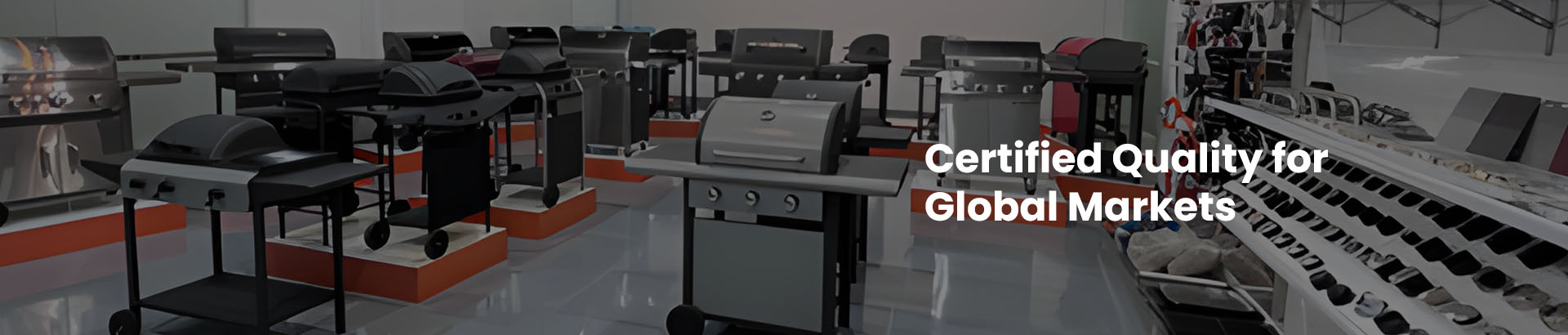
From a sourcing perspective, hamburgers are a practical way to test grill performance. A good gas barbecue grill should sear the outside cleanly, keep the center cooking evenly, and reduce flare up problems caused by dripping fat. TOPGRILL presents itself as a professional manufacturer of gas barbecue grills and charcoal grills, with about 9 years of production experience, a factory area of about 20,000 square meters, around 230 employees, and export coverage across Europe, South Africa, South America, Australia, and New Zealand. Its site also highlights OEM and ODM capability and certifications including CE, LFGB, BSCI, and ISO.
Basic Method For Grilling Hamburgers
Preheat the grill first so the cooking grate reaches a stable temperature. Place the patties over direct heat, allow the surface to brown, then turn only when the first side releases cleanly. Keep the lid closed as needed to maintain even heat, and use a thermometer to confirm the internal temperature reaches 160°F. This method supports better texture and more reliable food safety.
For buyers evaluating outdoor cooking products, this common grilling process also shows whether the grill design is truly functional. A stable flame, balanced burner arrangement, and well finished grate all contribute to better barbecue hamburger results. That makes hamburger testing a useful checkpoint when reviewing a bbq grill supplier or a commercial gas grill factory.
Manufacturer Vs Trader
The difference between a manufacturer and a trader becomes clear when technical questions go deeper. A true manufacturer can explain burner structure, grate material, metal thickness, coating method, ignition design, and production testing. TOPGRILL repeatedly identifies itself as a manufacturer on its official pages, which gives buyers a more direct path for specification review, project communication, and repeat order control.
For project sourcing, this matters because product performance is shaped long before shipment. When the factory understands heat distribution, grease management, and assembly details, the final gas grill is more likely to deliver consistent cooking performance across batches.
OEM And ODM Process
In an OEM gas grill project, the buyer usually confirms burner quantity, grill size, grate material, logo position, packaging format, and accessory configuration first. In an ODM process, an existing platform can be adjusted faster for target markets, helping shorten development time while keeping technical reliability. TOPGRILL states that it offers OEM and ODM customization services tailored to different market needs, which supports private label development and differentiated product planning.
This is important for long tail demand such as portable gas grill for hamburgers, outdoor burger grill with even heat, and customized barbecue grill for retail programs. A factory with direct development capability can respond more effectively than a trading source when projects require structural changes or packaging revisions.
Manufacturing Process Overview
A high quality gas grill depends on controlled manufacturing rather than appearance alone. In practical terms, production should include sheet metal processing, frame welding, surface finishing, burner installation, ignition assembly, and final performance verification. Each step affects how well the grill handles real cooking scenarios such as hamburgers, steaks, or chicken.
Material standards used in this process are equally important. Food contact surfaces and grilling parts should be selected for heat resistance, corrosion control, and cleanability. A better finished grate helps patties release more cleanly and makes routine maintenance easier, which improves long term product value for both distributors and project buyers.
Quality Control Checkpoints
Quality control checkpoints should focus on the parts that directly affect safety and cooking performance. For hamburger grilling, the most important checks are gas leak testing, ignition reliability, burner consistency, grate finish, and final assembly accuracy. TOPGRILL product information and company pages emphasize factory production capability and export oriented quality standards, which support this type of evaluation.
| Checkpoint | Why it matters |
|---|---|
| Gas leak test | Supports safe operation |
| Burner ignition test | Improves startup stability |
| Heat distribution check | Helps hamburgers cook evenly |
| Grate surface inspection | Supports easier cleaning and better food contact performance |
| Final assembly review | Improves consistency in bulk orders |
Bulk Supply Considerations And Export Market Compliance
For bulk supply considerations, buyers should review more than unit price. Lead time, spare parts support, packaging protection, sampling speed, and repeat batch consistency all influence the real cost of a grill program. TOPGRILL states that sample production usually takes 7 to 15 days and that its business is fully export oriented, which helps buyers plan development and shipment more efficiently.
Export market compliance should also be confirmed before mass production begins. TOPGRILL lists CE, LFGB, and DGCCRF on product pages and highlights CE, BSCI, and ISO on its company page. For a sourcing checklist, this means buyers should verify certification scope, product labeling, carton marks, food contact documentation, and destination market requirements at the quotation stage instead of waiting until shipment.
Grilling hamburgers on gas grill may look simple, but it is an effective test of engineering, material selection, and factory control. A grill that can deliver safe temperature, even searing, and stable daily use usually reflects stronger manufacturing capability from the beginning of the production process.