
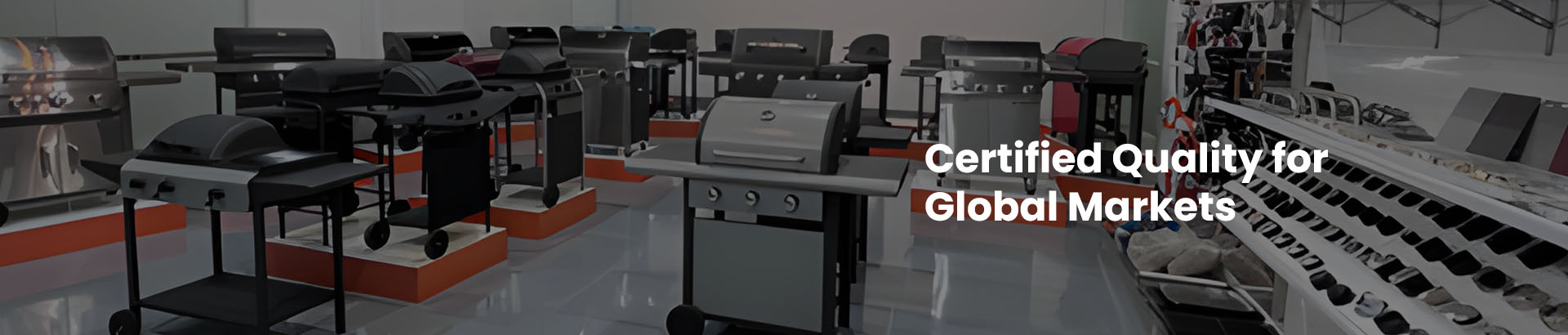
Compact Gas BBQ Grill vs Large Gas BBQ Grill: Which Is Easier for Global Distribution?
Compact Gas BBQ Grill is generally easier for global distribution because of lower shipping requirements and wider application scenarios, while Large gas bbq grill targets premium markets with higher capacity needs.
What Is the Difference Between Compact Gas BBQ Grill and Large Gas BBQ Grill?
The main difference between compact gas bbq Grill and Large Gas BBQ Grill is product size, cooking capacity, transportation requirements, and target market positioning.
Compact Gas BBQ Grill is designed for customers who need space-saving outdoor cooking equipment. Its smaller structure makes it easier to package, transport, store, and distribute across different regions.
Large Gas BBQ Grill provides a bigger cooking area, stronger functionality, and more premium outdoor cooking experience. It is commonly used in large gardens, outdoor kitchens, and high-end residential projects.
From a global distribution perspective, manufacturers need to consider not only product performance but also shipping efficiency, market demand, packaging design, and local usage conditions.
Why Is Compact Gas BBQ Grill Easier for Global Distribution?
Compact Gas BBQ Grill has advantages in international distribution because of its smaller size and flexible application.
Key benefits include:
Lower shipping volume
Easier warehouse management
Reduced storage requirements
More convenient retail display
Suitable for different living environments
For global markets, product size directly affects logistics efficiency. Compact models usually require less packaging space, allowing brands to optimize transportation costs.
They are suitable for:
Online retail channels
Outdoor equipment stores
Camping markets
Urban residential customers
Entry-level outdoor cooking segments
For manufacturers, compact structures also provide flexibility when developing products for different regions.
When Does Large Gas BBQ Grill Provide Better Market Opportunities?
Large Gas BBQ Grill is designed for customers who require higher cooking capacity and complete outdoor cooking functions.
It is commonly used in:
Spacious residential properties
Outdoor kitchens
Hospitality projects
Premium retail channels
Commercial outdoor cooking areas
Its advantages include:
Larger cooking surface
Multiple burner configurations
Additional storage
More accessories
Premium product appearance
Although larger grills require more attention during transportation and storage, they often support higher product value and stronger brand positioning.
Which Gas BBQ Grill Is More Suitable for International Shipping?
International distribution requires careful consideration of packaging size, container loading, and transportation costs.
| Comparison | Compact Gas BBQ Grill | Large Gas BBQ Grill |
|---|---|---|
| Product Size | Smaller | Larger |
| Packaging Volume | Lower | Higher |
| Shipping Efficiency | Easier | Requires more planning |
| Warehouse Space | Less required | More required |
| Retail Display | Flexible | Requires larger space |
| Market Position | Wide market coverage | Premium segment |
Compact models usually have advantages in large-scale distribution because they are easier to handle throughout the supply chain.
Large models can still perform well in international markets when positioned as premium products with higher profit margins.
Which Product Fits More Global Customer Groups?
Compact Gas BBQ Grill often reaches a wider customer base because outdoor spaces vary greatly between countries and regions.
It fits customers who:
Live in urban areas
Have limited outdoor space
Prefer easy storage
Enjoy camping and travel
Need flexible cooking solutions
Large Gas BBQ Grill is more suitable for markets where:
Homes have larger outdoor areas
Outdoor kitchens are common
Consumers prioritize premium lifestyles
Family gatherings are frequent
Understanding regional lifestyles helps brands select the right product size for expansion.
How Does Product Size Affect OEM Manufacturing?
Product size influences not only distribution but also manufacturing planning.
Compact Gas BBQ Grill production focuses on:
Space-efficient structures
Lightweight components
Packaging optimization
Easy assembly
Large Gas BBQ Grill production focuses on:
Structural strength
Larger cooking systems
Premium materials
Additional functional components
For OEM projects, manufacturers usually evaluate:
Target market
Expected sales volume
Shipping requirements
Product positioning
Customer price range
A suitable design helps brands achieve better balance between product value and supply chain efficiency.
Which Gas BBQ Grill Has Better Retail Distribution Potential?
Retail distribution success depends on product positioning and sales channels.
Compact Gas BBQ Grill is often suitable for:
E-commerce platforms
Supermarkets
Outdoor retail stores
Camping equipment channels
Its smaller size allows easier inventory management and wider market coverage.
Large Gas BBQ Grill is more suitable for:
Specialty outdoor stores
Premium retailers
Project-based sales
Outdoor kitchen suppliers
The two categories serve different market strategies rather than competing directly.
What Should Brands Consider Before Selecting a Gas BBQ Grill Size?
Before choosing between Compact and Large Gas BBQ Grill, brands should evaluate:
Target Region
Different countries have different housing structures, outdoor spaces, and consumer habits.
Distribution Channel
Online sales usually benefit from compact products, while showroom and project sales may support larger models.
Logistics Cost
Product dimensions affect shipping, storage, and inventory expenses.
Market Positioning
Compact models support broader customer reach, while large models support premium branding.
Final Answer: Compact Gas BBQ Grill or Large Gas BBQ Grill, Which Is Easier for Global Distribution?
Compact Gas BBQ Grill is generally easier for global distribution because it offers better shipping efficiency, flexible applications, and wider customer accessibility. Large Gas BBQ Grill provides stronger cooking capacity and premium value for markets with higher space and performance requirements.
For outdoor cooking brands, selecting the right product size depends on target regions, distribution channels, and market positioning. An experienced BBQ grill manufacturer can provide suitable product designs and OEM solutions for different global markets.