
What's The Difference Between Barbecuing And Grilling
Barbecuing and grilling are two popular outdoor cooking methods, but they are different in cooking temperature, heat control, cooking time, and equipment requirements. Understanding these differences helps users choose the right outdoor cooking equipment for different food types and cooking experiences.
From a manufacturing perspective, the difference between barbecue and grilling also influences product design. Different cooking methods require different structures, heat distribution systems, burners, cooking surfaces, and temperature control solutions.
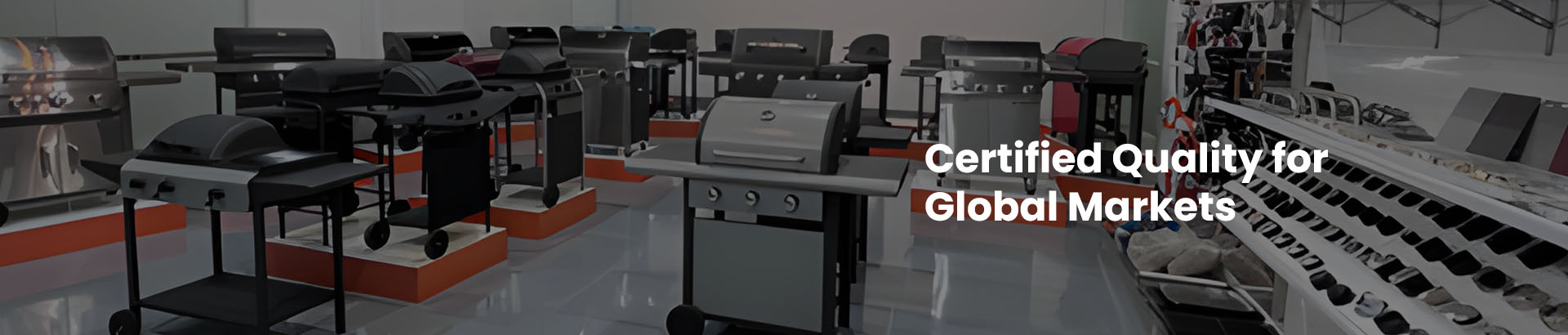
As a professional outdoor cooking equipment manufacturer, TOPGRILL specializes in gas BBQ Grills, charcoal BBQ grills, portable gas grills, Planchas, and pizza ovens. With around 20,000 square meters of factory space, approximately 230 employees, OEM and ODM capability, and international certifications including CE and LFGB, TOPGRILL provides outdoor cooking solutions for global markets. (TUORUI)
Barbecuing Uses Low Heat And Longer Cooking Time
Barbecuing is a slow cooking method that uses lower temperatures and indirect heat.
The typical characteristics include:
Lower cooking temperature
Longer cooking duration
Indirect heat circulation
Smoke absorption
Barbecue temperatures are commonly around 110°C to 150°C, making this method suitable for foods that require gradual cooking, such as:
Ribs
Brisket
Large cuts of meat
Whole poultry
The slow cooking process allows connective tissues to break down gradually, creating tender textures and deeper flavors.
Because barbecue requires stable heat for a longer period, barbecue equipment needs:
Strong heat retention
Reliable temperature control
Durable cooking chambers
Effective heat distribution structures
Grilling Uses High Heat And Faster Cooking
Grilling is a faster cooking method that uses direct heat.
Compared with barbecuing, grilling usually involves:
Higher temperatures
Shorter cooking time
Direct contact with heat
Quick surface browning
Grilling temperatures often range from around 200°C to 300°C, making it suitable for:
Steaks
Burgers
Vegetables
Seafood
Sausages
The main goal of grilling is to quickly cook food while creating a flavorful outer surface.
This requires outdoor grills with:
Efficient burners
Even heat distribution
Strong cooking grates
Easy temperature adjustment
Key Differences Between Barbecuing And Grilling
| Comparison | Barbecuing | Grilling |
|---|---|---|
| Cooking temperature | Low to medium heat | High heat |
| Cooking time | Several hours | Several minutes |
| Heat method | Indirect heat | Direct heat |
| Food type | Large cuts of meat | Smaller portions |
| Main feature | Tender texture and smoky flavor | Fast cooking and surface searing |
Choosing between barbecue and grilling depends on the cooking purpose and the type of food being prepared.
Different Cooking Methods Require Different Grill Designs
Outdoor cooking equipment manufacturers need to consider cooking methods during product development.
A grill designed for barbecue applications often focuses on:
Heat stability
Large cooking chambers
Temperature control
Smoke circulation
A grill designed for grilling focuses more on:
Burner power
Cooking surface efficiency
Fast heat response
Easy operation
For example, Gas BBQ Grills usually use burner systems to provide adjustable heat, while charcoal grills rely on charcoal combustion and airflow management.
TOPGRILL offers different outdoor cooking categories including gas BBQ grills, Portable Gas BBQ Grills, planchas, charcoal BBQ grills, and pizza ovens to meet different cooking applications. (TUORUI)
Material Selection Affects Cooking Performance
Whether used for barbecuing or grilling, material quality directly affects product durability and cooking performance.
Common materials used in outdoor grills include:
| Component | Common Material | Main Benefit |
|---|---|---|
| Grill body | Stainless steel or coated steel | Corrosion resistance |
| Cooking grate | Enamel-coated iron or stainless steel | Heat performance |
| Burner | Stainless steel | Heat durability |
| Control panel | Stainless steel | Long-term appearance |
Outdoor grills face challenges such as:
High temperatures
Outdoor humidity
Frequent cleaning
Long-term exposure
Therefore, manufacturers must balance:
Heat resistance
Structural strength
Surface protection
Maintenance convenience
Manufacturing Process Overview For BBQ Equipment
A reliable outdoor grill manufacturer controls every production stage.
Metal Processing
The process begins with:
Sheet metal cutting
Component forming
Precision processing
Welding And Assembly
Manufacturers focus on:
Welding strength
Structural accuracy
Component connection
Surface Treatment
Surface treatment improves:
Corrosion resistance
Appearance quality
Product durability
Functional Testing
Before shipment, grills are tested for:
| Quality Check | Purpose |
|---|---|
| Burner testing | Verify stable heating |
| Ignition testing | Ensure reliable operation |
| Heat performance testing | Confirm cooking efficiency |
| Assembly inspection | Maintain product consistency |
| Packaging inspection | Protect during transportation |
TOPGRILL operates with ISO9001 management systems and provides OEM and ODM services, supporting customized outdoor cooking product development. (TUORUI)
OEM And ODM Process For Outdoor Grill Projects
Different markets may require different grill designs.
A professional OEM and ODM process includes:
Requirement Analysis
Manufacturers evaluate:
Target market
Cooking style
Product positioning
Material requirements
Product Development
Customization may include:
Grill size
Burner configuration
Cooking area
Exterior design
Packaging
Sample Testing
Samples should be tested for:
Heating performance
Structural stability
User operation
Safety requirements
Mass Production
The factory manages:
Material consistency
Production efficiency
Quality standards
Delivery schedules
A complete OEM process helps ensure customized products maintain stable performance during mass production.
Manufacturer Vs Trader: Why Factory Capability Matters
When selecting outdoor cooking equipment suppliers, manufacturing capability is an important factor.
A manufacturer can directly control:
Material selection
Production processes
Product improvements
Quality inspections
Technical adjustments
A trader usually depends on external factories, which may reduce flexibility in:
Product customization
Production communication
Quality tracking
Design adjustments
Working directly with a manufacturer allows better control over product consistency and long-term supply planning.
TOPGRILL identifies itself as a professional manufacturer specializing in gas barbecue grills and charcoal grills, with export experience across Europe, South Africa, South America, Australia, and New Zealand. (TUORUI)
Quality Control Checkpoints For BBQ Grills
Outdoor cooking equipment requires strict quality control because products must handle heat, outdoor environments, and repeated operation.
Important checkpoints include:
| Inspection Area | Focus |
|---|---|
| Material inspection | Confirm durability |
| Welding inspection | Ensure structural strength |
| Burner testing | Verify heating performance |
| Surface inspection | Check finishing quality |
| Final assembly | Maintain product reliability |
Quality control should cover the entire manufacturing process rather than only checking finished products.
Bulk Supply Considerations For Outdoor Cooking Equipment
For commercial projects and seasonal product programs, stable supply capability is essential.
Important evaluation factors include:
| Factor | Key Question |
|---|---|
| Production capacity | Can the factory support order volume? |
| Quality consistency | Are repeat batches stable? |
| Customization ability | Can product changes be supported? |
| Export experience | Are market requirements understood? |
| Packaging | Are products protected during shipping? |
A reliable manufacturer should provide consistent quality and stable production support.
Export Market Compliance
Outdoor grills sold internationally need to meet different market expectations.
Important considerations include:
Product safety requirements
Material standards
Food-contact requirements
Packaging regulations
Certification support
TOPGRILL products are designed for international markets and the company highlights certifications including CE, LFGB, BSCI, and ISO-related quality systems. (TUORUI)
Project Sourcing Checklist
Before selecting outdoor cooking equipment, consider:
| Evaluation Item | Key Question |
|---|---|
| Cooking method | Barbecue or grilling application? |
| Product type | Gas grill, charcoal grill, or portable grill? |
| Material | Is it suitable for outdoor use? |
| Structure | Can it handle repeated operation? |
| Quality | Are testing procedures available? |
| Customization | Can OEM requirements be supported? |
| Supply | Can production remain stable? |