
How To Barbecue Ribs On A Gas Grill
Barbecue ribs require low temperature, controlled airflow, and enough cooking time to develop a tender texture. Start by removing the membrane from the back of the ribs, drying the surface, and applying a balanced seasoning mix. Before cooking, preheat the gas grill and prepare an indirect heat area.
Step-by-Step Rib Grilling Process
Set the grill temperature between 135 and 150°C. Place the ribs bone-side down away from direct flames, close the lid, and maintain stable heat throughout the cooking process. Most pork ribs require around four to six hours depending on thickness and cooking style.
Add barbecue sauce during the final 20 to 30 minutes to prevent sugar from burning. A meat thermometer helps confirm doneness. According to USDA food safety guidance, pork cuts should reach a minimum internal temperature of 63°C with a three-minute rest period.
| Cooking Stage | Recommended Temperature | Purpose |
|---|---|---|
| Preheating | 175 to 200°C | Stabilize grill temperature |
| Slow cooking | 135 to 150°C | Break down connective tissue |
| Final glazing | 160 to 180°C | Create caramelized surface |
Grill Performance and Heat Management
Consistent rib quality depends on even heat distribution, reliable burners, and effective temperature control. A well-designed gas grill should maintain stable airflow while reducing hot spots.
The TOPGRILL Four Burner Gas Grill features a 700 × 400 mm cooking area, four heat diffusers, stainless steel 409 burners, and a double-layer hood. This structure helps create separate cooking zones for slow barbecue ribs and high-temperature finishing.
Manufacturing Capability Behind Reliable Grills
Choosing a barbecue grill manufacturer involves more than comparing appearance and price. A manufacturer manages the complete production process, including sheet metal forming, welding, surface treatment, burner installation, assembly, testing, and packaging. This provides better control over product consistency than a trading-based supply model.
For OEM and ODM projects, the process normally includes product requirement review, engineering confirmation, prototype testing, packaging design, trial production, and final mass production. Key quality control checkpoints include gas leakage testing, ignition performance, flame stability, heat distribution, coating adhesion, component fitting, and carton protection.
Bulk Supply and Export Checklist
Before placing bulk barbecue grill orders, review several important factors:
Material standards for burners, cooking grids, body panels, and coatings
Gas compatibility and regulator requirements for target markets
Product testing documents and export compliance requirements
Packaging strength for long-distance transportation
Production capacity and delivery schedule
Spare parts availability and after-sales support
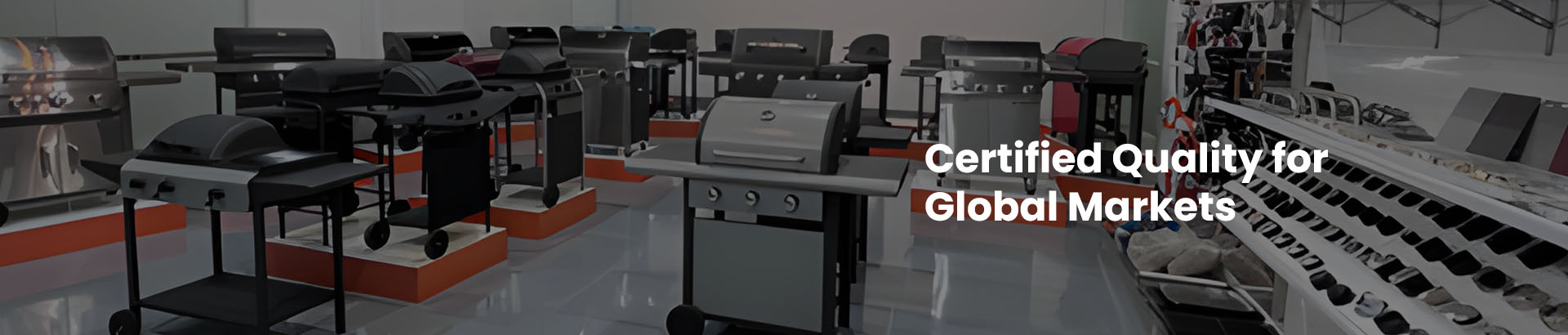
TOPGRILL integrates product development, manufacturing management, and quality inspection to support customized barbecue grill programs. The factory follows ISO 9001 management practices and provides products designed for international markets with requirements including CE and LFGB compliance.