
How To Barbecue Chicken Legs on Gas Grill
Barbecuing chicken legs on a gas grill starts with controlled heat and correct internal temperature. USDA guidance states that all poultry should reach 165°F, and it recommends checking doneness with a food thermometer rather than relying on color alone. For chicken legs, this matters because the outer skin can brown quickly while the meat near the bone still needs more time. A stable gas grill makes that process easier by holding more even heat across the cooking area.
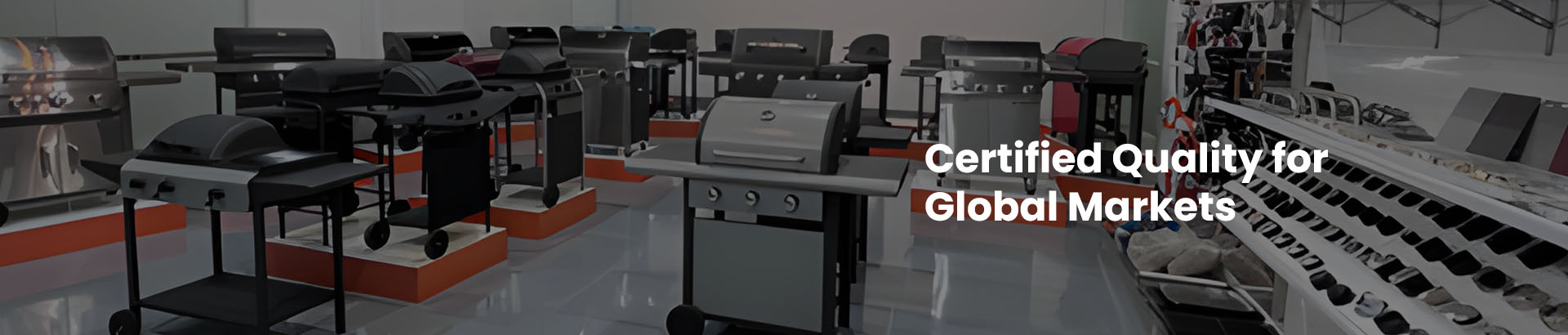
From a sourcing perspective, chicken legs are also a practical performance test for any gas barbecue grill. They contain skin, fat, and bone, so they quickly show whether a grill can manage flare ups, maintain lid heat, and deliver balanced burner output. TOPGRILL presents itself as a professional manufacturer of gas barbecue grills and charcoal grills, with about 20,000 square meters of factory space, around 230 employees, 9 years of manufacturing experience, OEM and ODM support, and export coverage across Europe, South Africa, South America, Australia, and New Zealand. Its site also states certifications including CE, LFGB, BSCI, and ISO.
Basic Method For Grilling Chicken Legs
Preheat the gas grill first so the grate and inner chamber reach a steady cooking condition. Place the chicken legs over medium heat, turn them regularly, and close the lid when needed to keep the temperature more consistent. The goal is to brown the skin gradually while allowing the meat close to the bone to cook through safely. A thermometer should be inserted into the thickest part of the meat without touching bone, and the final reading should reach 165°F.
For product evaluation, this cooking process reveals much more than flavor. It shows whether the gas grill supports real outdoor cooking through steady burners, practical grate design, and manageable heat zones. A grill that cooks chicken legs evenly usually reflects better engineering and tighter production control.
Manufacturer vs Trader
The difference between a manufacturer and a trader becomes clear when technical questions go deeper. A manufacturer can explain burner structure, grate materials, coating method, body thickness, and testing logic in detail. TOPGRILL identifies itself as a manufacturer and highlights OEM and ODM customization, which gives buyers a more direct route for development, specification adjustment, and repeat order control.
For long term grill programs, this matters because cooking performance is shaped in the factory. When a supplier has direct control over metal processing, burner assembly, and quality inspection, the final product is more likely to stay consistent across multiple production runs.
OEM And ODM Process
In an OEM or ODM gas grill project, buyers should confirm the cooking area, burner quantity, grate finish, lid structure, logo placement, packaging style, and accessory configuration at an early stage. TOPGRILL states that it offers OEM and ODM customization services for different markets and customer needs. That is important for private label programs and differentiated outdoor cooking lines, especially in segments such as portable gas grills, compact family grills, and seasonal retail collections.
A strong OEM and ODM process also reduces delays. When the factory can connect design changes, sample approval, and production scheduling within one system, the project becomes easier to manage from quotation to shipment.
Manufacturing Process Overview
A dependable gas grill is built through controlled manufacturing rather than appearance alone. For this category, buyers should review the manufacturing process overview from metal forming and welding to coating, burner installation, ignition assembly, and final packing. These steps directly affect whether the grill can hold steady heat for foods like chicken legs that need both browning and safe internal cooking.
Material standards used are equally important. Burners, grates, coated body panels, and heat control parts should be selected for heat resistance, corrosion control, and stable daily use. Better material control improves durability, cleaning performance, and long term market acceptance.
Quality Control Checkpoints
Quality control checkpoints should focus on the parts that directly affect safety and cooking results. For gas grills, these are usually gas path sealing, burner ignition, flame consistency, grate finish, and final assembly fit. A useful project sourcing checklist can include the points below:
| Checkpoint | Why it matters |
|---|---|
| Gas leak inspection | Supports safe operation |
| Ignition reliability test | Improves startup consistency |
| Heat distribution check | Helps chicken legs cook evenly |
| Grate surface inspection | Supports cleaning and food contact performance |
| Final assembly review | Improves repeat order consistency |
These checkpoints are especially important in bulk supply programs, where even small production variation can affect complaint rates and after sales performance.
Bulk Supply Considerations
Bulk supply considerations should include more than price. Buyers should review sample speed, production lead time, carton strength, loading efficiency, spare parts planning, and the factory’s ability to keep the same standard across repeat orders. TOPGRILL’s published factory size, employee scale, and export focus suggest that it is structured for larger supply programs rather than only small domestic transactions.
For outdoor cooking equipment, this matters because seasonal demand and regional distribution often require stable production scheduling and predictable shipment execution.
Export Market Compliance
Export market compliance should be checked before production begins, not after the order is finished. TOPGRILL states that its products hold certifications including CE, LFGB, BSCI, and ISO, which are important signals for overseas grill programs. Buyers should still confirm that the exact product model, technical file, labels, manuals, and market specific requirements match the final shipment.
Chicken legs may look simple, but they are a demanding test for any gas grill. A model that can cook them safely, evenly, and efficiently usually reflects stronger materials, better burner design, more disciplined manufacturing, and tighter quality control from the very beginning.