
Stainless Steel Vs Cast Iron Grill
Choosing between a stainless steel grill and a cast iron grill is not only a cooking question. It is also a sourcing decision tied to durability, maintenance, manufacturing control, and export market fit. Stainless steel is defined by at least 10.5 percent chromium, which creates a passive oxide layer that improves corrosion resistance. Cast iron, by contrast, is an iron alloy with about 2 to 4 percent carbon and is widely valued for strong heat retention. These differences shape how each grill performs in storage, transport, daily use, and long term supply programs.
For outdoor grill applications, stainless steel usually performs better where moisture resistance, easier cleaning, and lower maintenance are priorities. Cast iron is often chosen when heat retention and searing performance matter more. Lodge notes that cast iron has great heat retention, while stainless steel’s chromium based protection makes it better suited to humid or variable outdoor environments. In practical sourcing terms, this means stainless steel grill products often fit broader export needs, while cast iron grill components may require more careful storage and surface care.
Material Standards Used
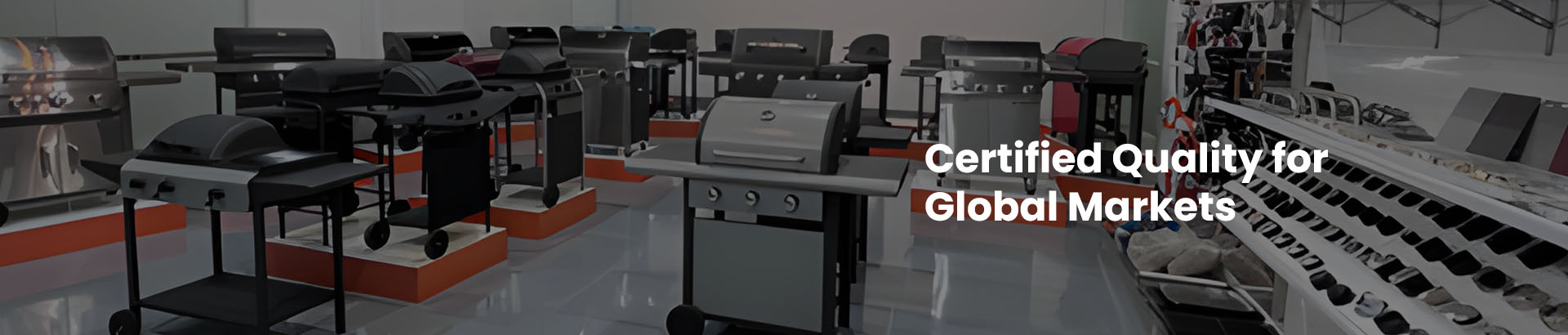
Material standards used in grill manufacturing directly affect product positioning. Stainless steel is commonly selected for burners, fasteners, and some grill bodies because corrosion resistance supports outdoor use and repeat cleaning. Cast iron is more often used for cooking grates because it stores heat well and helps create stronger sear marks. TOPGRILL’s official site shows this mixed material logic clearly. It presents the company as a manufacturer of gas barbecue grills and charcoal grills, with about 20,000 square meters of factory space, about 230 employees, 9 years of experience, and export business focused on Europe, South Africa, South America, Australia, and New Zealand.
Manufacturer vs Trader
The difference between a manufacturer and a trader becomes important when buyers need to compare Stainless Steel Vs Cast Iron Grill construction in detail. A manufacturer can explain steel grade, coating structure, grate thickness, burner layout, and how heat performance is tested. TOPGRILL identifies itself as a factory with OEM and ODM capability, which gives buyers a more direct path for technical review, design adjustment, and repeat order consistency.
OEM and ODM Process
In an OEM or ODM project, the stainless steel vs cast iron decision should be made early. Buyers should confirm whether the target market needs easier maintenance, stronger searing, lighter handling, or lower long term rust risk. Stainless steel often supports modern outdoor grill collections aimed at simpler maintenance, while cast iron can strengthen cooking performance claims in specific models. With OEM and ODM support, the factory can align grate material, body structure, packaging, and product positioning with the intended market.
Manufacturing Process Overview and Quality Control Checkpoints
A grill comparison should include manufacturing process overview, not only cooking results. Stainless steel parts require controlled forming, welding, and surface finishing. Cast iron parts depend on stable casting quality and surface treatment. Quality control checkpoints should review grate flatness, coating condition where applied, burner performance, corrosion exposure, and assembly fit.
| Checkpoint | Why it matters |
|---|---|
| Material confirmation | Verifies stainless steel or cast iron specification |
| Surface inspection | Affects rust resistance and cleanability |
| Heat performance test | Shows searing and heat retention behavior |
| Assembly review | Supports consistency in bulk orders |
| Packing inspection | Protects heavy parts during export shipment |
Bulk Supply Considerations and Export Market Compliance
For bulk supply considerations, stainless steel often has an advantage in international distribution because it is easier to position for durability, lower maintenance, and outdoor storage. Cast iron can add cooking value, but it may need more care in packaging, warehousing, and after sales guidance. TOPGRILL states that it offers OEM and ODM customization and holds international certifications including CE and LFGB, which is important for project sourcing checklist review and export market compliance planning.
Stainless steel vs cast iron grill is not a question of which material is always better. It is a question of which material fits the product target, market demand, and supply strategy more accurately. In most export oriented outdoor grill programs, stainless steel supports wider market acceptance, while cast iron remains a strong option where heat retention and cooking performance are the main selling points.